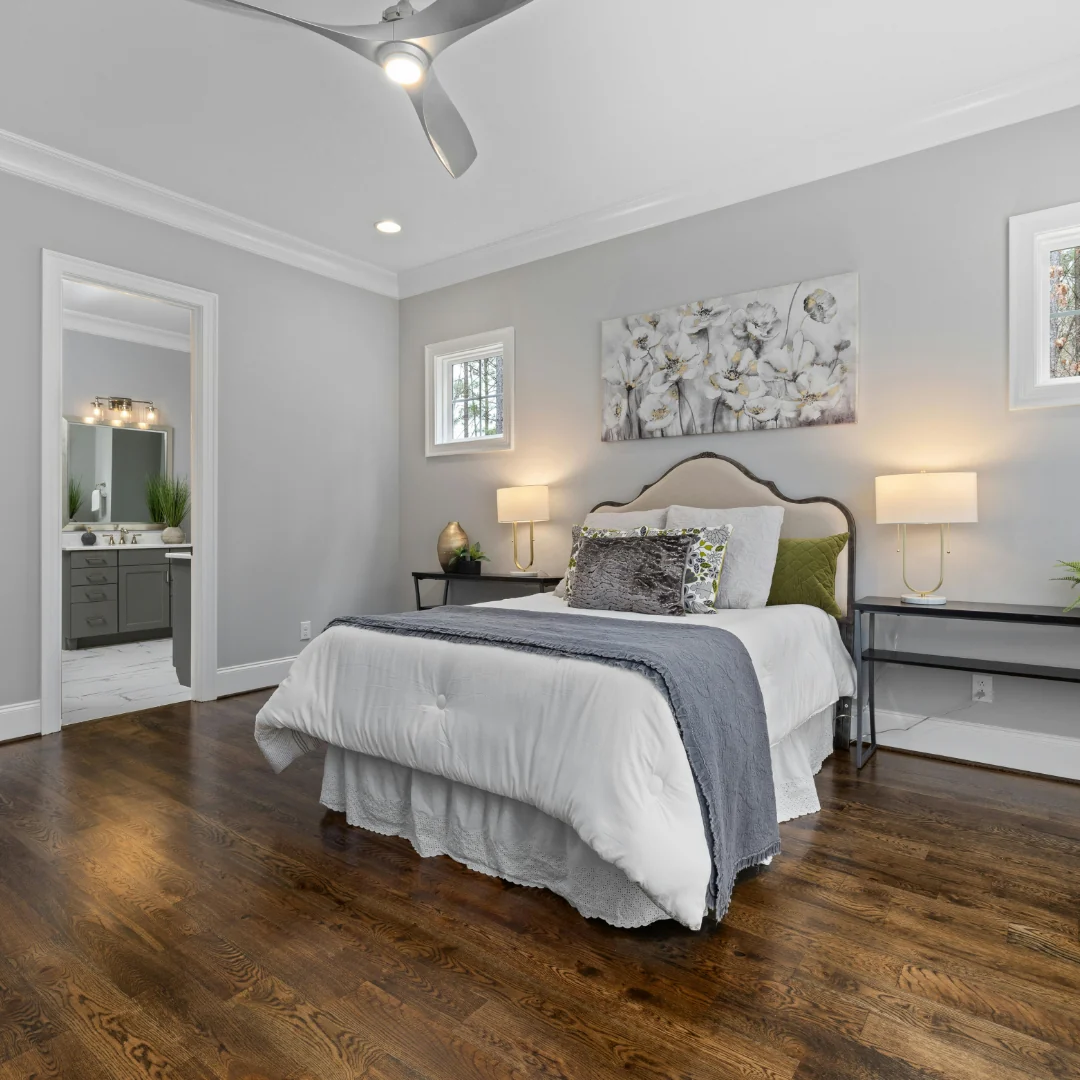
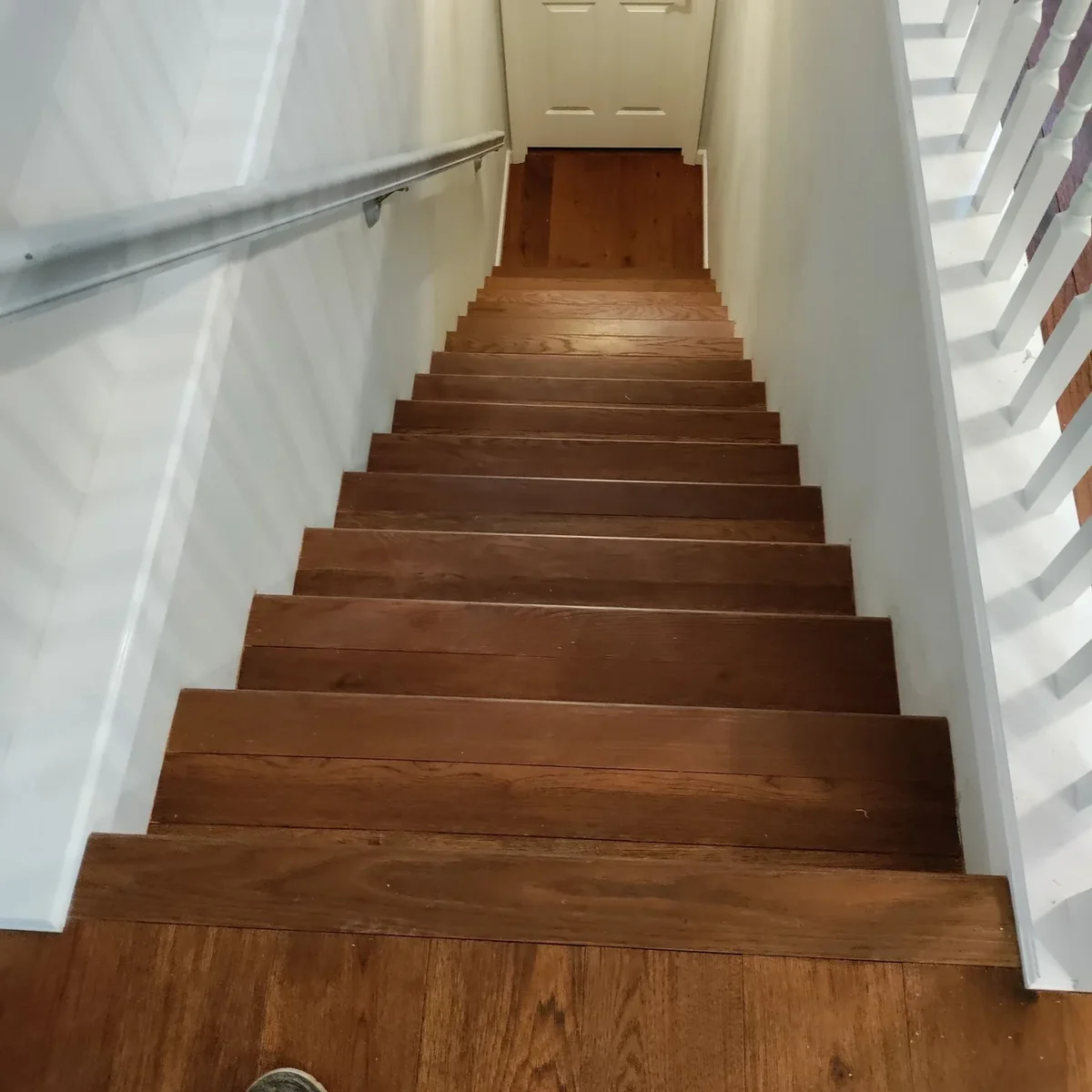
Stairs are the part of a flooring job that separates crews. A flat room is geometry. A staircase is fourteen individual pieces cut to a landing that is not quite square, in a house that finished settling around 1935. If you are redoing floors in a two-story St. Louis home, decide the stairs early. They move the material list, the schedule and the price more than any other twelve feet of the house.
The Four Real Options
Solid hardwood treads
A hardwood staircase with white risers is the look most people picture when they picture a nice house, and in an older St. Louis home it usually matches original oak already running through the hall. You can refinish existing treads if solid oak is hiding under the carpet, or install new treads over the existing stringers. It is the hardest surface, the longest life and the most labor. It is also the loudest and the slipperiest in socks.
Carpet runner over wood
A runner splits the difference. Wood shows on both sides of the tread, the middle gets grip and sound absorption, and the runner can be replaced in ten years without touching the stairs underneath. Runners take real layout work to stay centered on stairs that are not perfectly parallel, and the wood on either side still has to be sanded and finished properly, so this is not a shortcut.
Full carpet
Wall-to-wall on the stairs is the quietest, warmest and most forgiving choice, and it is the least expensive way to make an ugly staircase disappear. It is what most families with young kids land on. Waterfall installation drapes the carpet over the nose and costs less; upholstered wraps each tread and looks tailored. Run the same carpet upstairs and the transition at the top disappears.
Luxury vinyl plank and laminate
LVP on stairs works, and it is popular in basements and split-levels, but only with the matching stair nose from the same product line. Cutting planks and gluing them onto a tread is how you get squeaks and lifting edges in year two. Laminate stairs follow the same rule. Both are the right call when the stairs run down to a basement that has taken water before.
| Option | Cost per tread | Noise | Grip | Best for |
|---|---|---|---|---|
| Solid hardwood treads | $100 - $150 | Loudest | Low in socks | Front stairs in older homes with oak floors |
| Carpet runner over wood | $90 - $140 | Quiet down the middle | Good | Looks plus safety, replaceable later |
| Full carpet | $60 - $100 | Quietest | Best | Kids, older dogs, upstairs bedrooms |
| LVP or laminate with stair nose | $80 - $130 | Loud | Moderate | Basement stairs, split-levels, water risk |
Safety, Noise and Pets
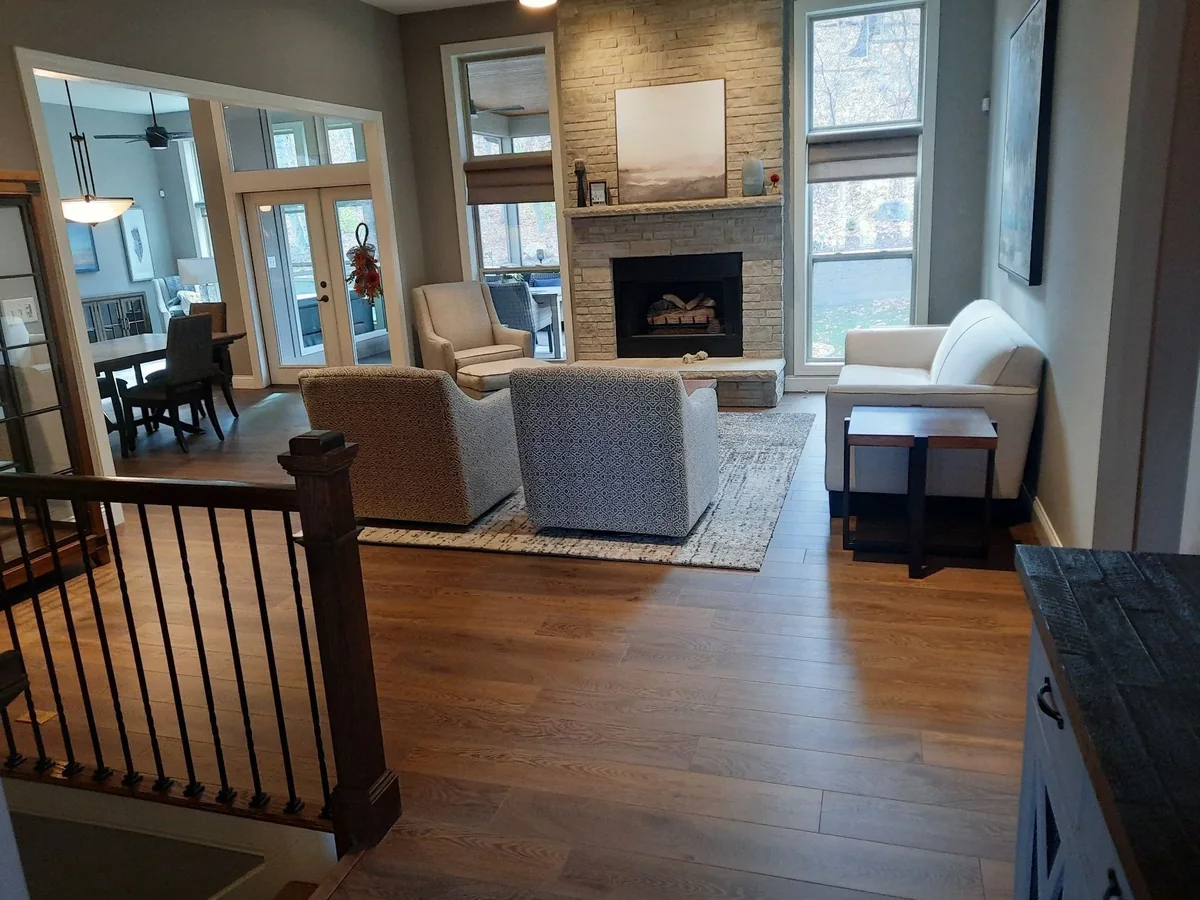
Stairs are where falls happen, and the details that prevent them are boring. Every riser in a flight should be within about three eighths of an inch of every other one. Your foot learns the rhythm in the first two steps and then stops looking. One tread an inch taller at the top is how people fall. When a crew sets new treads over old stringers, that math has to be checked rather than assumed.
- Nosing: the lip at the front of the tread should overhang about an inch and be rounded. It is what your foot finds on the way down.
- Grip: carpet or a runner beats any hard surface. If you want wood, a low-sheen finish reads less slick than gloss.
- Dogs: older dogs and short-legged breeds lose traction on bare wood. A runner is often the entire fix.
- Noise: hardwood stairs in a 1920s house telegraph every step to the room below. Carpet and pad kill most of it.
- Handrails and open sides: worth looking at while the stairs are apart and access is easy.
Stairs are the easiest part of a quote to get wrong. We count and measure every tread before we write a number.
Get a free in-home estimateWhy Stairs Are the Most Skill-Intensive Part of the Job
In a hundred-year-old home in Kirkwood or south city, no two treads are the same length, the walls are not plumb, and the stringers have moved with the house. Every tread gets scribed to the wall individually, dry fit, adjusted, then set. A winder or a pie-shaped turn at a landing means angled cuts in two planes. There is no snapping a chalk line and running the whole flight.
The finish work is the other half. Treads are glued and blind nailed so no fasteners show. Risers get scribed to fit. Returns on an open side are mitered so end grain never shows. When we refinish existing treads, the sanding is done by hand at the nose and in the corners because a machine cannot reach either one. It is slow, careful work, and it is why the per-tread number looks steep next to the per-square-foot number for the rooms.
Matching the Stairs to the Floors Around Them
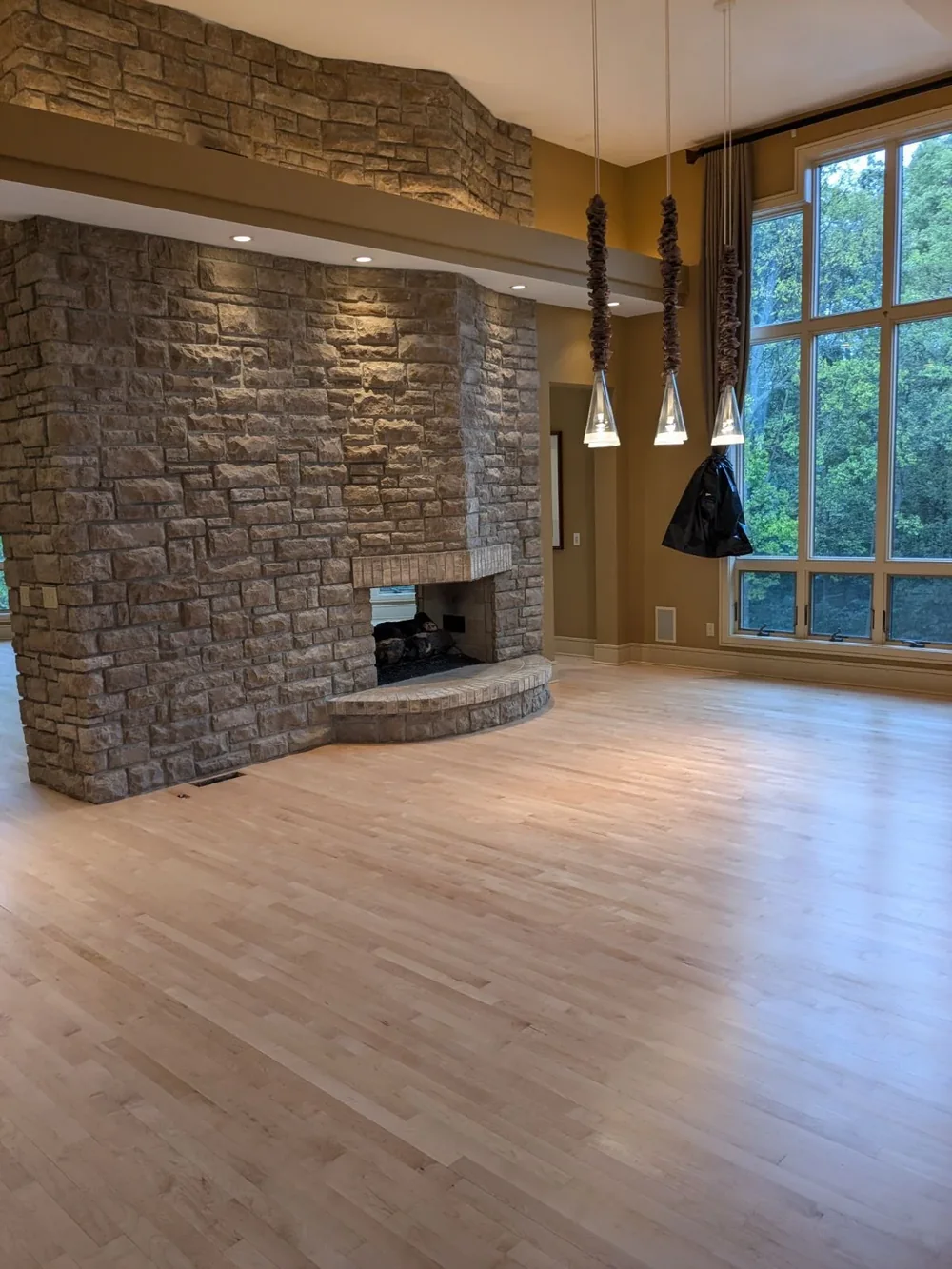
The stairs land in a hall, and the hall has a floor. If we are refinishing the original oak upstairs and down, the treads get sanded and stained in the same pass so the color is identical. If you are installing new floors, new white oak treads next to an existing red oak hall floor will not match on their own, and pretending otherwise is how people end up unhappy on the last day. Either both get stained together, or you choose contrast on purpose.
Contrast done deliberately looks great. Dark stained treads with white painted risers against a lighter floor is a clean, common look in St. Louis homes, and it hides tracked-in winter grit better than a pale tread does. What never works is an accidental near-match, where two woods sit almost the same and your eye keeps catching the difference every time you walk up.
What to Budget
Figure $60 to $150 per tread installed, and count your treads before comparing quotes. A standard flight is thirteen or fourteen, and a landing with winders adds cost. Ask whether the number includes risers, skirt boards, the nosing at the top and hauling the old carpet out, because those are the items that quietly separate two bids that looked identical on the first page. A free in-home estimate puts all of it on paper, and the showroom at 149 Weldon Pkwy in Maryland Heights has stair samples you can stand on. Call (314) 897-4383 if you would rather start with a conversation.