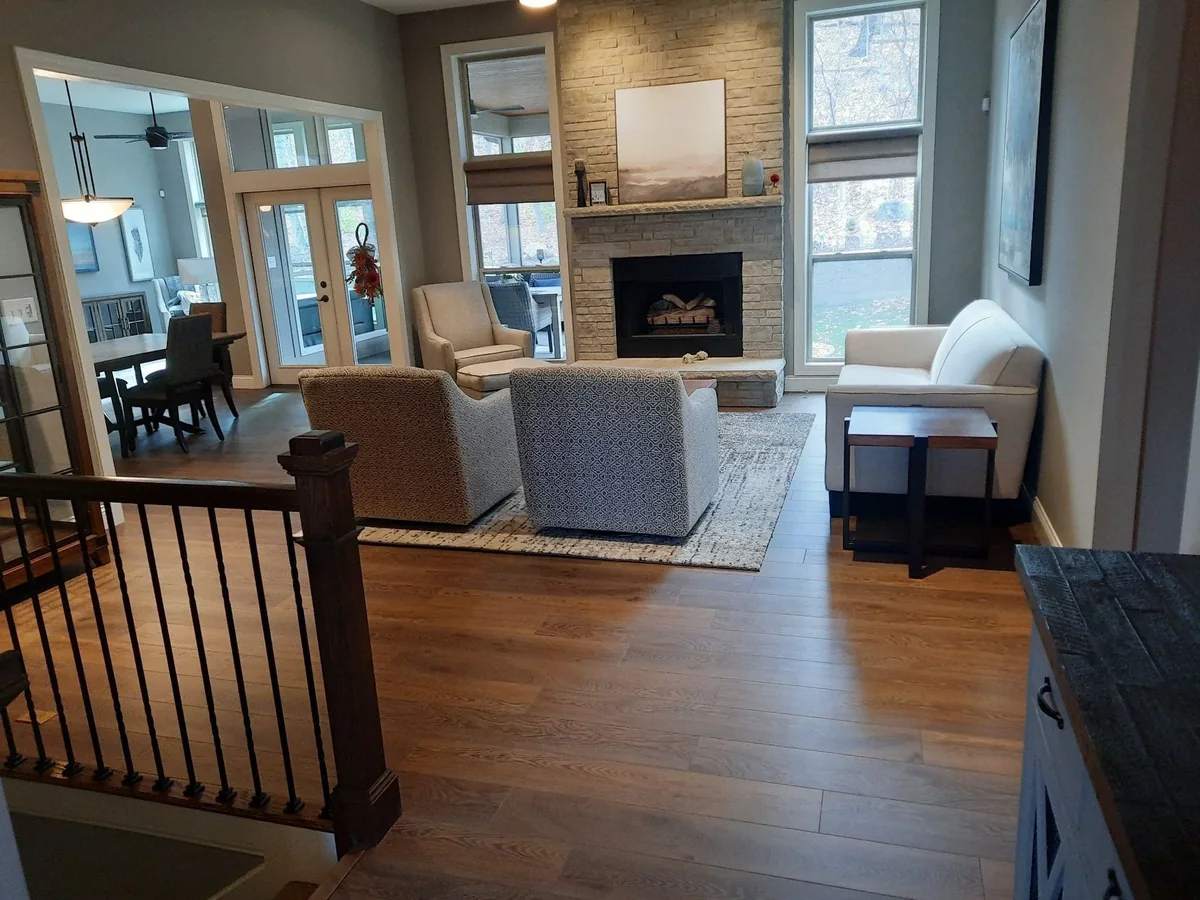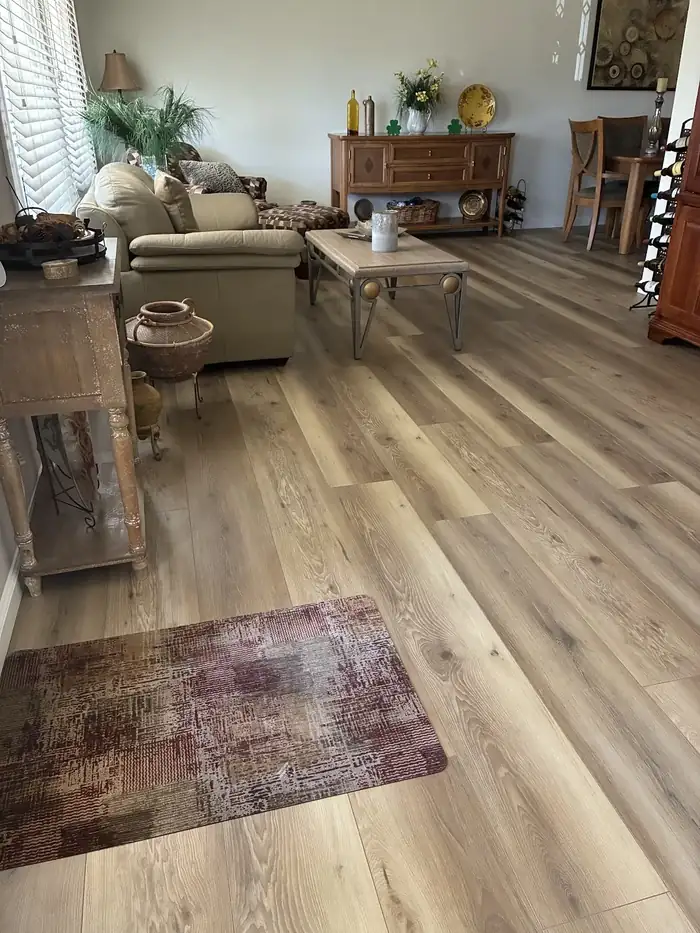
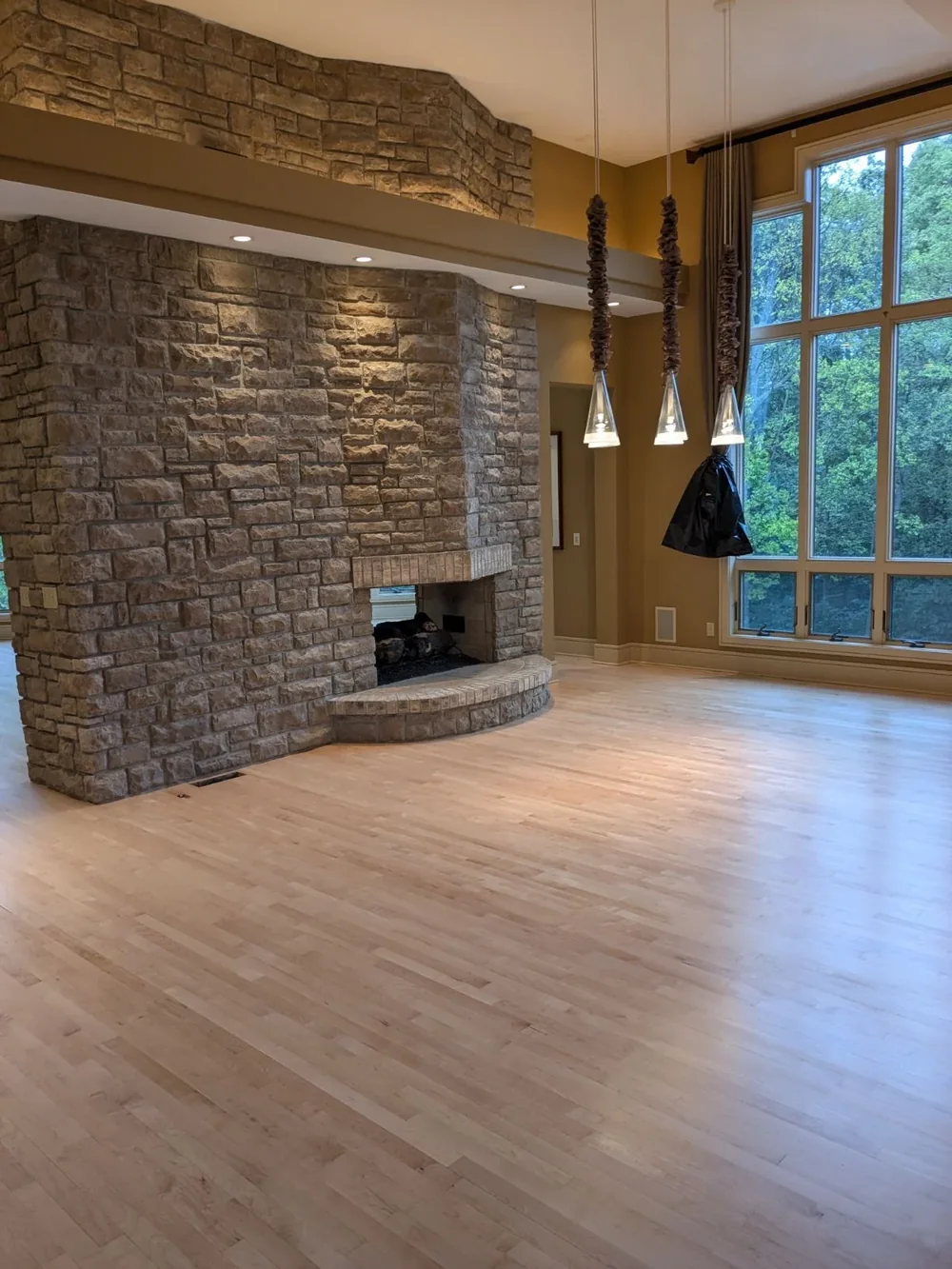
Refinishing is the work our customers talk about most, and it is the best money most St. Louis homeowners can spend on a floor. This post covers what hardwood refinishing actually costs here in 2026, what makes one job cost more than the next, and how to tell when sanding the old wood is smarter than tearing it out.
The Numbers for a Typical Job
We quote refinishing by the square foot, the same as new flooring. At $3.50 to $6 installed, here is what real rooms and real houses come out to around the metro.
| Area | Square feet | Refinishing at $3.50 - $6 |
|---|---|---|
| One bedroom | 150 | $525 - $900 |
| Living and dining room | 450 | $1,575 - $2,700 |
| Main floor of a city two-flat | 800 | $2,800 - $4,800 |
| Main floor of a mid-county ranch | 1,100 | $3,850 - $6,600 |
| Whole house with halls and closets | 1,600 | $5,600 - $9,600 |
| Stair flight | 12 - 14 treads | $60 - $150 per tread |
Compare that to replacement. The same 1,100 square foot ranch in new solid oak runs $9,900 to $17,600 installed, and that is before you price new stair treads or the shoe molding. If the existing wood has life left, refinishing is not the compromise. It is the better floor for less money, because old growth oak in a 1920s house is denser than most of what gets milled today.
What Drives the Price Up or Down
Two houses on the same street can be quoted a dollar apart per square foot, and there are good reasons for it. These are the factors our sales team weighs when he writes your number.
| Factor | Bottom of the range | Top of the range |
|---|---|---|
| Color | Clear finish over natural oak | Dark or custom stain, tested on your boards |
| Condition | Traffic wear and light scratches | Pet stains, water rings, boards to replace |
| Coats | Two coats of finish | Three coats, or a hardwax oil product |
| Layout | Open rooms, furniture already out | Small rooms, closets, register vents, tight halls |
| Species and pattern | Plain red oak strip | Maple, herringbone, or a wood border inlay |
| Access | Ground floor, easy parking | Second floor of a city flat, alley parking only |
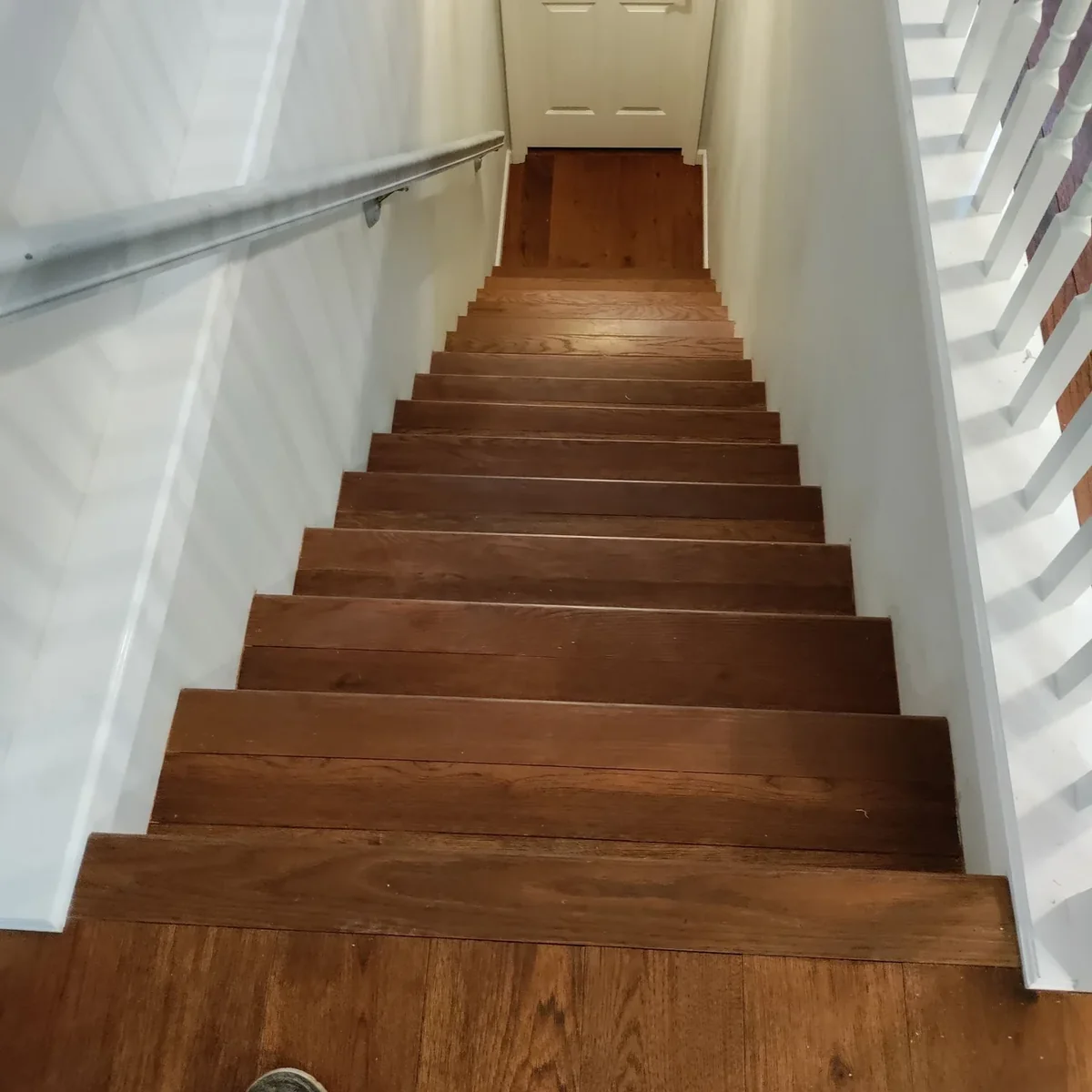
Why the Stain Sample Session Matters
Red oak, white oak and maple all take stain differently, and the same can of stain looks like two different colors in a north facing room and a south facing one. That is why our sales team brings samples and puts them down on your actual floor, in your actual light, and sits with you while they dry. It takes about an hour. It is the single best hour you can spend on this project, because color is the one decision that cannot be undone after the sander runs.
It matters more in older St. Louis homes than people expect. A 1926 Tudor in Webster Groves with dark trim and leaded glass wants a different tone than a bright 1968 ranch with big windows. We match to the trim and the light, not to a chip in a catalog.
Dust, Timing, and What the Week Looks Like
We sand dustless. That means the sanders run to a vacuum system instead of throwing fine oak dust across your house. It is not literally zero dust, and anyone who tells you otherwise is selling. It is a dramatic difference from the old way, and it is the reason customers can stay in the house for most of a job.
A typical whole floor runs three to five days: sand and edge on day one, stain on day two, then coats of finish with dry time between them. Water based finishes let you walk in socks sooner. Oil based finishes take longer and amber over time, which some people want in a period home. Keep furniture off for a few days after the last coat, and give area rugs a full week.
Curious what your floors would cost to bring back?
Get a free refinishing estimateWhen Refinishing Beats Replacing
Refinishing wins whenever there is enough wood left above the tongue to take another sanding, and the boards are dry, flat and reasonably tight. That describes an enormous share of homes in Kirkwood, University City, and the city neighborhoods where oak strip flooring is standard equipment. Surface scratches, gray traffic paths, sun fade next to a picture window, cloudy old finish, even a few dark spots - all of that sands off.
Replacement wins when the wood is out of thickness, when a leak has rotted boards and the subfloor under them, or when whole rooms are missing flooring because someone tiled over it decades ago. Even then it is often partial. We lace in new matching strips where the damage is and refinish everything together so the repair disappears. That kind of floor repair is regular work for our crew, including kitchens where the old floor stopped at the cabinet line and needed blending.
Missouri Humidity and Your Newly Finished Floor
Wood moves here. Our summers push dew points into the 70s and our winters run dry with the furnace going, so hardwood swells in August and shrinks in January. That is normal. Thin gaps that open between boards in winter and close by June are the floor breathing, not a defect. Keeping indoor humidity somewhere between 35 and 55 percent year round is the single best thing you can do for a wood floor in this climate, and a whole house humidifier does more good in this town than most upgrades people spend money on.
The other local hazard is winter. Salt and slush off the driveway get tracked in and both are hard on finish. A real mat inside and outside every entry door, and wiping up the melt instead of letting it sit, will add years to the coat you just paid for.
Getting a Number for Your Floors
Our sales team measures, checks the wood thickness at a vent, looks for stains and cupping, and writes you one price. Call (314) 897-4383, or come by the showroom at 149 Weldon Pkwy in Maryland Heights, Monday through Friday from 8 to 5 - directions are on our location page. We offer financing through Hearth and Synchrony if you want to spread it out, and you can read how these jobs actually go on our reviews page.