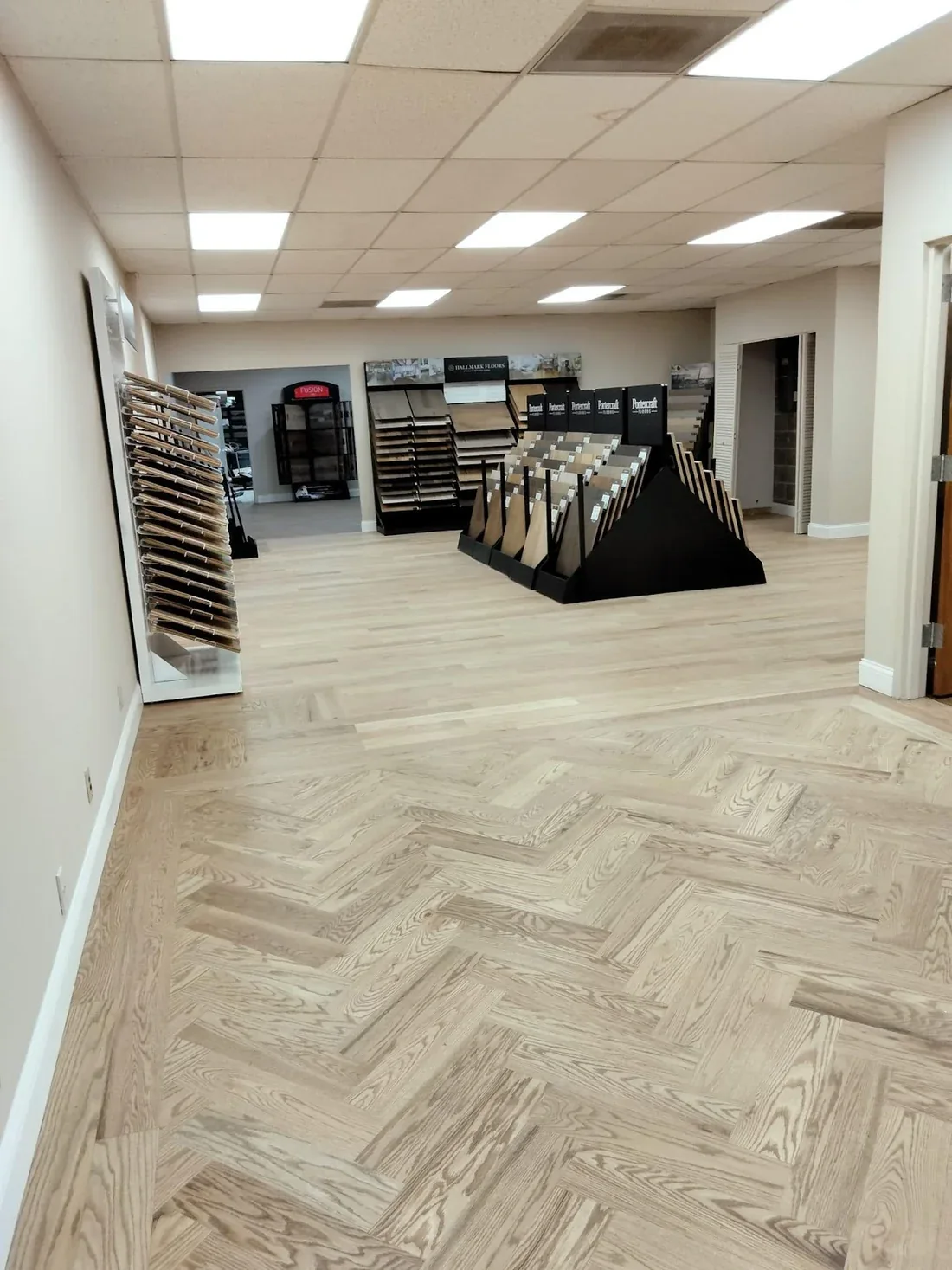
Carpet shopping goes sideways for one reason. Everything on the rack feels soft in the store, so people buy with their hands and end up disappointed in eighteen months. The things that decide whether you still like your carpet in year five are the fiber, the twist, the density, and the pad underneath it, and only one of those is obvious when you touch a sample. This is the walkthrough we give homeowners at the showroom, minus the pressure.
Start With the Fiber
Four fibers cover almost everything sold in this region, and each of them is genuinely right for something.
| Fiber | Strength | Weakness | Put it here |
|---|---|---|---|
| Nylon | Most resilient, springs back from crushing | Costs the most, stains unless treated | Stairs, hallways, family rooms, high traffic |
| Polyester (PET) | Rich color, naturally stain resistant, great value | Mats down sooner in traffic lanes | Bedrooms, formal rooms, budget-conscious whole-house |
| Triexta | Very good stain resistance, soft, durable | Fewer product lines to choose from | Family homes with kids and pets |
| Olefin (polypropylene) | Cheap, moisture and bleach resistant | Crushes badly in cut pile, holds oily soil | Basements, loop and berber constructions, commercial |
Two more numbers to ask for. Face weight, in ounces per square yard, tells you how much fiber is up there. Density tells you how tightly it is packed, and density beats face weight when you have to pick one. The quick test at the rack: bend a sample backward. If you can easily see the backing through the fibers, that is a low-density carpet and it will show traffic lanes early. Also look at the twist. Tightly twisted, heat-set yarn tips hold their shape. Loose, open tips fuzz out and start looking tired long before the carpet is actually worn out.
The Pad Is Half the Floor
People will spend an extra dollar a square foot on carpet and then let someone put the cheapest pad in the warehouse under it. The pad carries the impact of every footstep. Skimp there and the carpet takes that abuse directly, which means it crushes faster and the warranty gets a lot less interesting to the manufacturer.
For most homes, 8 pound rebond pad at 7/16 inch is the right call. Bump to 8 pound at 1/2 inch in bedrooms if you want extra plush. Go the other direction on stairs and in high traffic areas, where a thinner, firmer pad is better because a thick soft pad lets the carpet flex over the stair nose and wear through. If pets are in the picture, a pad with a moisture barrier keeps accidents from reaching the subfloor, which is the difference between cleaning a spot and chasing an odor for two years.
- 6 lb rebond: builder grade, fine for a guest room, not for a house you live in hard.
- 8 lb rebond, 7/16 in: the practical residential standard for bedrooms and family rooms.
- 8 lb with moisture barrier: the pet answer.
- Firm, thin pad or double-glue: stairs and heavy traffic runs.
- Below grade, use a synthetic pad rated for it. Never a felt or fiber pad in a basement.
Pets, Kids, and the Reality of a Missouri Winter
Pet-proofing carpet is three layers of defense working together. First, solution-dyed fiber, meaning the color goes all the way through the strand instead of being applied to the surface. That is what lets you clean an accident aggressively without bleaching a pale spot into the floor. Second, a moisture barrier backing or pad so nothing soaks into the subfloor. Third, a color and pattern that hides life. A subtle multi-tone or a light pattern hides more than a flat solid, and mid-tones hide more than either extreme.
Winter here is the other test. Salt, slush and gravel come in off driveways from December through March, and grit is what actually kills carpet. It works down into the pile and cuts the fibers every time someone walks on it. Two good entry mats and a serious vacuum schedule in the traffic lanes will add years to a carpet in this climate. A lot of families in Hazelwood and the mid-county ranches do the smart thing and run hard surface in the entry and hallway with carpet in the bedrooms, which keeps the worst of it off the soft floor entirely.
Stairs Are Their Own Project
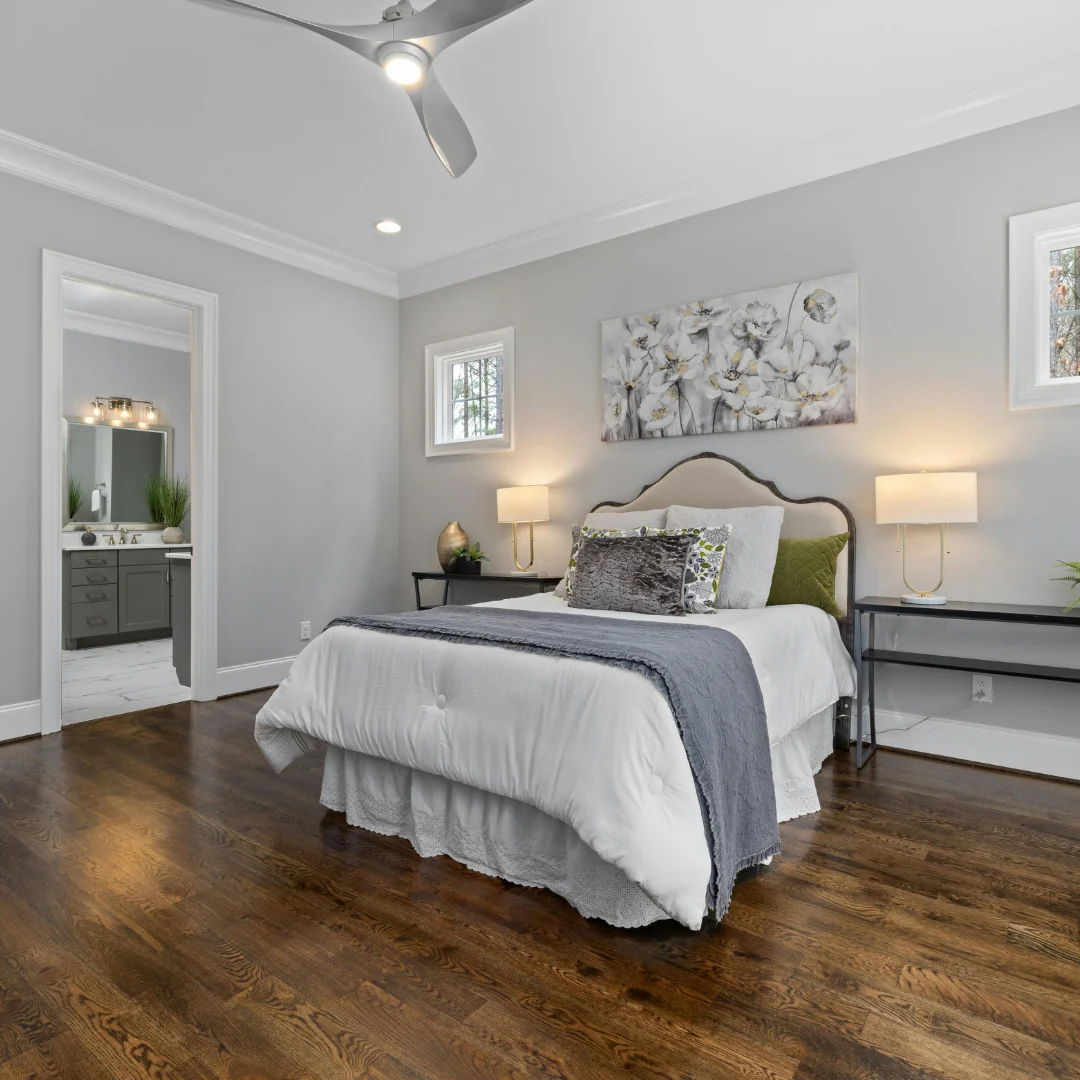
Stairs take more wear per square foot than anywhere else in a house, and they are the single most technique-sensitive part of a carpet job. There are two main approaches. Waterfall, where the carpet runs over the nose and straight down to the next tread, is faster and standard on many builder installs. Upholstered, or cap and band, wraps the carpet tightly around the contour of each nosing. It costs more in labor and it looks noticeably better, especially on an open staircase where you see the sides.
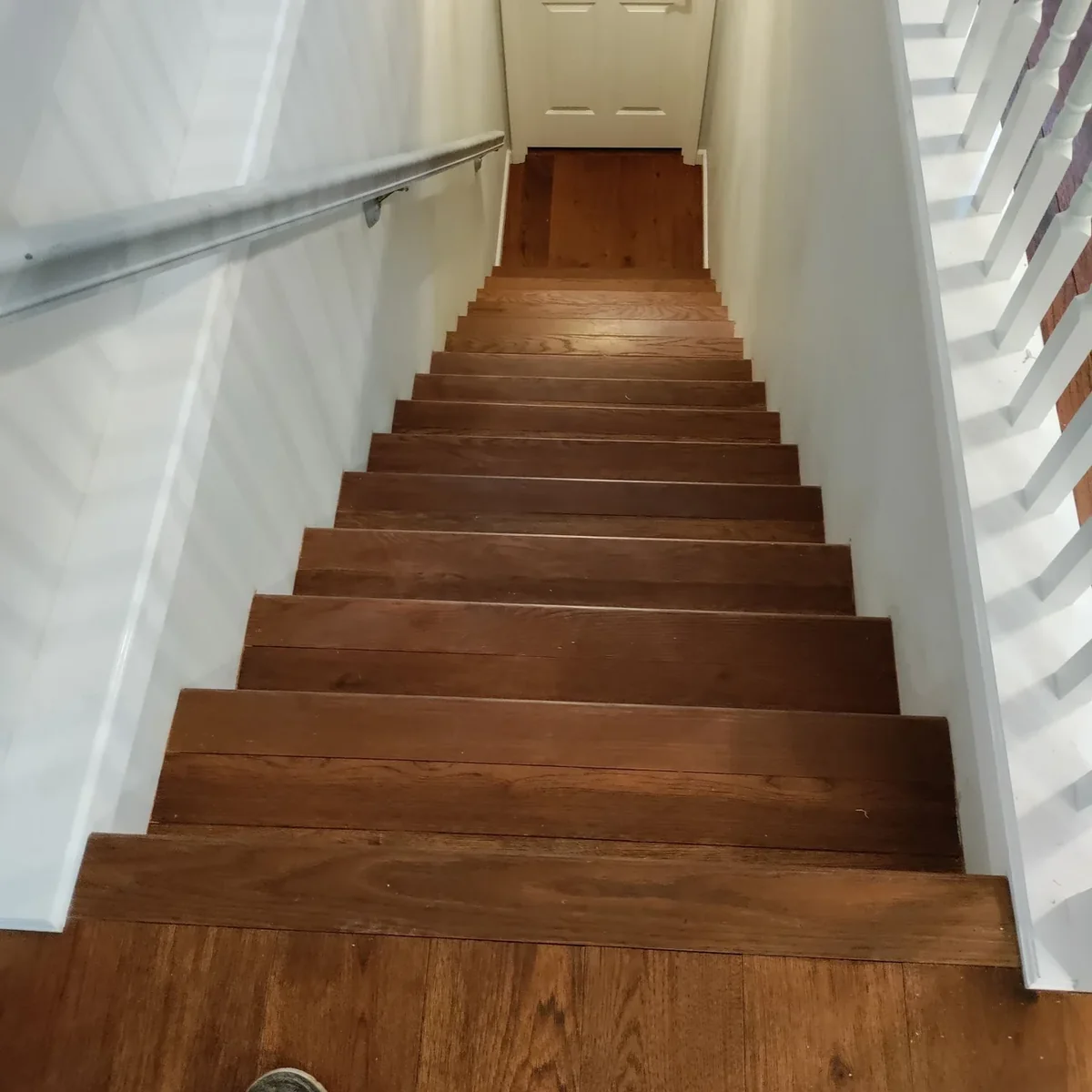
Budget $60 to $150 per tread depending on the material and method. Choose a durable fiber up there, nylon or triexta, with a firm pad. If the stairs are the visual centerpiece of an entry, it is also worth asking about the alternative: in a lot of older homes there is solid oak under that stair carpet, and hardwood stairs with painted risers can transform an entry. We do both, and we will tell you which one your staircase is actually built for.
Basements: Carpet, Carpet Tile, or Something Else
Almost every home in this region has a basement and many of them have taken water at some point. That history should drive the decision. If the lower level has never been wet and has good drainage and a working sump with a backup, a synthetic carpet over a moisture-barrier pad rated for below grade is comfortable and warm. If it has been wet even once, look hard at carpet tiles instead. When water comes in, you pull and replace the affected squares rather than tearing out and rebuying an entire room.
If the basement floods on a schedule, be honest about it and go with luxury vinyl plank plus area rugs. Nobody enjoys hearing that, but it beats replacing carpet every few years. Whichever way you go, run a dehumidifier down there through the summer. St. Louis basement humidity in July is hard on everything, carpet included.
What Different Budgets Actually Get You
Installed pricing in this market, including pad, tack strip, and hauling the old carpet away, looks like this.
| Installed per sq ft | What you get | Realistic lifespan |
|---|---|---|
| $2.75 - $3.75 | Builder-grade polyester or olefin, 6 lb pad, light face weight | 3 - 6 years in a busy house |
| $4.00 - $5.50 | Good polyester or triexta, 8 lb rebond, solid density | 7 - 12 years |
| $5.50 - $7.50 | Nylon or premium triexta, upgraded pad, heavier face weight | 12 - 20 years with care |
A 300 square foot family room lands between roughly $825 and $2,250 installed depending on where you sit in that range. Three bedrooms plus a hall, call it 700 square feet, generally runs $1,900 to $5,300. Those are ranges, not quotes. A free in-home measure turns them into one written number with no surprises attached, and if the timing is tight, financing through Hearth can spread it out.
Ready for a real number on your rooms?
Schedule a free in-home measureInstallation Day, and What to Ask Before You Sign
Carpet comes in 12 foot and sometimes 15 foot widths, so any room wider than that has a seam. Where that seam falls is a craftsmanship decision. It should run with the light from the main window, not across it, and it should land out of the main traffic path. Ask where the seams will be before the job starts. Ask whether the price includes moving furniture, pulling and hauling the old carpet, and new tack strip. Ask about a power stretcher, because carpet that gets kicked in instead of properly stretched will ripple within a year or two.
Plan on the crew needing the rooms empty of small items and breakables, and give the house some airflow for a day or two afterward. A proper installation in an average three-bedroom is usually a single day.
Come touch the samples in person before you commit. Photos never get carpet color right. The showroom is at 149 Weldon Pkwy in Maryland Heights, open Monday through Friday 8 to 5, and our sales team will walk you through fiber, pad and pricing without a pitch. Call (314) 897-4383, browse the gallery for ideas, or book a free estimate and we will come measure.